


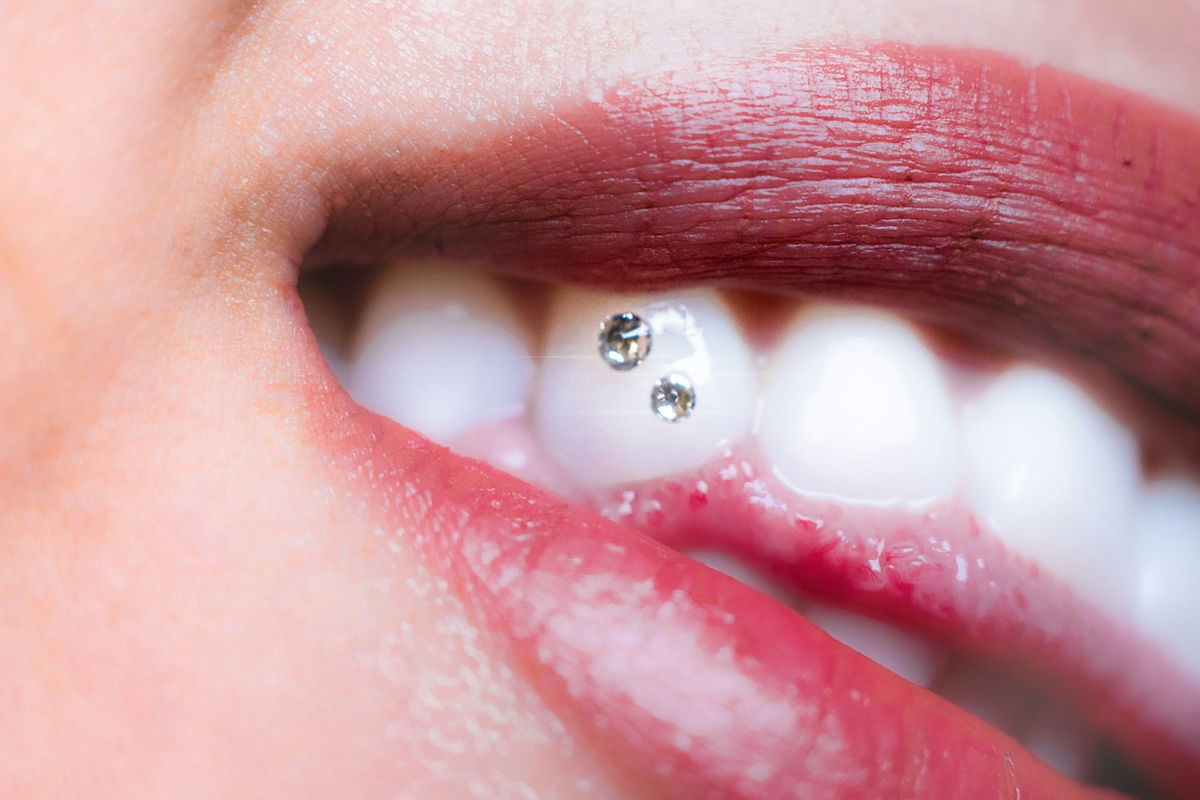
Short answer: A tooth gem (also called tooth jewellery or a tooth crystal) is a small decorative stone attached to the tooth surface with a special adhesive used in dentistry. It is applied without drilling or cutting the tooth, takes a short time and can be removed by a dentist whenever you wish. From a single tiny crystal to heart, star or moon-shaped figures, there are many options for adding a personal touch to your smile.

What is a tooth gem?
A tooth gem is a small accessory placed on the surface of a tooth that shows when you smile, usually one of the upper front teeth or a canine. Having become more popular in recent years along with social media, it appeals to people who want to add some sparkle to their smile without changing the structure of the tooth. Although the word “gem” is widely used, most of the pieces are tooth-friendly crystals; precious stones or gold figures are also available on request.
What shapes and styles are there?
The most enjoyable part of a tooth gem is that you can choose according to your own style. Popular options include:
- Single stone: A tiny round crystal on an upper lateral incisor or a front tooth. Often chosen by those who want a simple, elegant look.
- Heart, star and moon figures: Shaped stones or fine gold figures add a playful signature to your smile.
- Butterfly and flower designs: Tiny compositions created by grouping several small stones together.
- Coloured crystals: As well as clear stones, you can choose pink, blue, green or rainbow-effect stones.
- Multiple placements: Stones placed symmetrically or asymmetrically on two or three teeth give a more eye-catching look.
- Initials and symbols: Some people choose the initial of their name or a symbol that means something to them.

When choosing the size and position of the stone, the facial features, the lip line and the area of the teeth visible when smiling are considered together. This way the stone looks like a natural detail that suits your smile.
How is a tooth gem applied?
The application is usually quick and follows these steps:
- Examination: The tooth that will hold the stone is checked for decay, problems at the edges of fillings or gum inflammation.
- Choosing the design: The shape, colour and position of the stone are decided together; you can try it out in front of a mirror.
- Preparing the surface: A small area is cleaned, dried and prepared so the adhesive can hold. No drilling or cutting of the tooth is done.
- Bonding: A tooth-coloured adhesive is applied, the stone is placed and the adhesive is hardened with a special light.
- Final check: The edges are cleaned and the surface that touches the lip is checked to make sure it is smooth.
Most people can return to their daily routine right after the procedure. The method works on a similar principle to the small bumps bonded to teeth in orthodontics to help clear aligners grip; we explain this in our article what are attachments on clear aligners.
Why should it be done by a dentist?
At-home kits sold online may look tempting; however, the wrong adhesive can damage the enamel surface and the stone may soon fall off. When the application is done by a dentist:
- Materials that are suitable for teeth and made for use inside the mouth are used.
- No ledge that could trap plaque is left around the stone, and the edges are finished smoothly.
- The health of the tooth and gums is checked first; if needed, scaling or a filling is done beforehand.
- If you want the stone removed, the surface is polished to bring the tooth close to its previous appearance.
Tooth tattoos and figure options
In addition to stones, tiny designs applied to the tooth surface or onto a crown (tooth tattoos) and thin metal figures are also among the decorative options. These are planned in a similar way to tooth gems; your dentist evaluates which option suits your teeth.

Who is it suitable for?
It is a suitable option for adults with good oral and dental health who want to add a small detail to their smile. If there is untreated decay, gum inflammation or heavy tartar, it is recommended to deal with these first. For people who are having orthodontic treatment or will start soon, the timing of the stone should be planned with the dentist. If your teeth are crowded and this affects how the stone looks, treatment options for crowded teeth can be considered first.
How should you care for it?
- Avoid very hard and sticky foods for the first 24 hours.
- Gently and regularly brush around the stone with a soft toothbrush, and keep flossing.
- Avoid habits such as opening packets or biting hard objects with the tooth that holds the stone.
- Coffee, tea and smoking can cause discolouration around the stone. For more on staining, see our article on teeth whitening at home.
- Do not try to remove the stone yourself; see your dentist for removal or replacement.
- Have the stone and the area around it checked at your regular check-ups.

If you are considering a more comprehensive smile makeover, our article on the Hollywood smile can give you an idea of which treatments may be evaluated together.
Frequently asked questions
Does a tooth gem damage the tooth?
When applied by a dentist with suitable materials, no drilling is done and in most cases the tooth structure is preserved. After removal the surface is polished; whether a slight difference remains at the bonding area varies from person to person.
How long does a tooth gem last?
This depends on oral hygiene, eating habits and the position of the stone. It usually stays on for months, and for some people longer; it can be removed earlier or replaced whenever you wish.
What does the application feel like?
Because the tooth is not cut or drilled, most people only feel slight tiredness from keeping their mouth open during the application; anaesthesia is usually not needed.
What should I do if the stone falls off?
Keep the stone and see your dentist; if suitable, it can be bonded again. If the stone is swallowed, in most cases it passes through the digestive system; however, if there is coughing, shortness of breath or difficulty swallowing, call 112 without delay.
How can you find out what suits you?
The information here is general; the right option for you is determined by an examination and your dentist’s evaluation. For appointments and directions, please see our contact page.

