
1. Initial consultation and examination
At the first appointment, your concerns, expectations and medical history are discussed. Your teeth, gums, jaw joint, bite and facial profile are examined. At this stage you receive initial information on whether clear aligners are suitable for your situation and on any alternative methods. You can find more about what happens at the examination on the first orthodontic examination page.
If there are problems in the mouth that need treatment, such as decay, gum disease or a root canal, these need to be dealt with before orthodontic treatment.
2. Taking records
The records needed for diagnosis and planning are taken:
- X-rays: A panoramic X-ray, and if needed a cephalometric (side-of-head) X-ray, giving information about tooth roots, impacted teeth and the jawbones.
- Photos: Facial and intraoral photos.
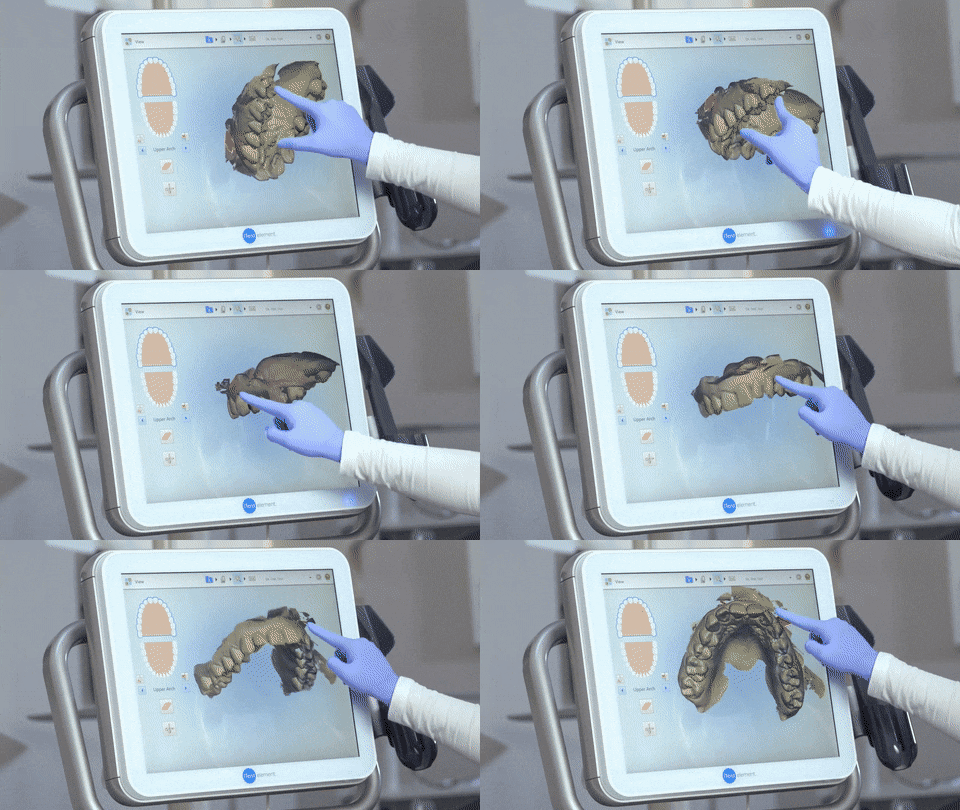
- Digital scan: A 3D model of the teeth taken with an intraoral scanner. No impression material is used; the scan takes a few minutes.
3. Digital treatment plan
Using the records, the orthodontist plans in which direction and how far each tooth will move. The planning software divides these movements into stages. The target position, the estimated number of aligners and the duration are shown to you in a 3D simulation. It is important to ask your questions at this stage and discuss whether your expectations match the plan.
Once the plan is approved, the aligners are manufactured. Production and delivery can take a few weeks.
4. Aligner fitting and attachments
At the fitting appointment, small tooth-coloured attachments are bonded to some teeth if the plan includes them. This usually does not require anaesthetic. The first aligners are then fitted and the following are demonstrated:
- How to put the aligners in and take them out
- How many hours a day they need to be worn
- How to clean the aligners and your teeth
- When to move on to the next aligner
5. Aligner changes and daily wear
Aligners are usually changed for the next one in the series every 1–2 weeks. Feeling pressure for the first few days of a new aligner is normal. The aligners need to be worn 20–22 hours a day, taken out before meals and put back after brushing. For details of daily wear, see the wear and care guide.
6. Check-ups and mid-course corrections
Check-ups usually take place every 6–10 weeks. At each check-up, the fit of the aligners, whether the tooth movements match the plan and your oral health are assessed, and the next sets of aligners are given. If the teeth have not fully followed the plan, a new scan can be taken and additional aligners made for the remaining movements. This is a normal part of the process.
7. Completing treatment
When the teeth reach the target position, the attachments are removed without harming the teeth and the tooth surfaces are polished. Final records are taken and the result is assessed.
8. The retention period
After orthodontic treatment, teeth tend to move back towards their old positions. Removable retainers or thin fixed wires bonded behind the teeth are used to keep the new position. Removable retainers are usually worn full-time at first and then at night. Details: retention.
What is expected of you throughout the process
- Wearing the aligners for the recommended time and following the aligner change schedule
- Not missing check-ups
- Taking care of your oral hygiene and keeping up regular dental check-ups
- Letting the clinic know straight away if an aligner is lost or broken or something unexpected happens