
Invisalign in brief
Invisalign is a clear aligner system developed by Align Technology and widely used around the world. The system covers digital scanning of the teeth, planning tooth movements with special software and producing custom aligners according to that plan. “Clear aligner treatment” is the name of the method; Invisalign is a registered brand that applies this method.
How do aligners move teeth?
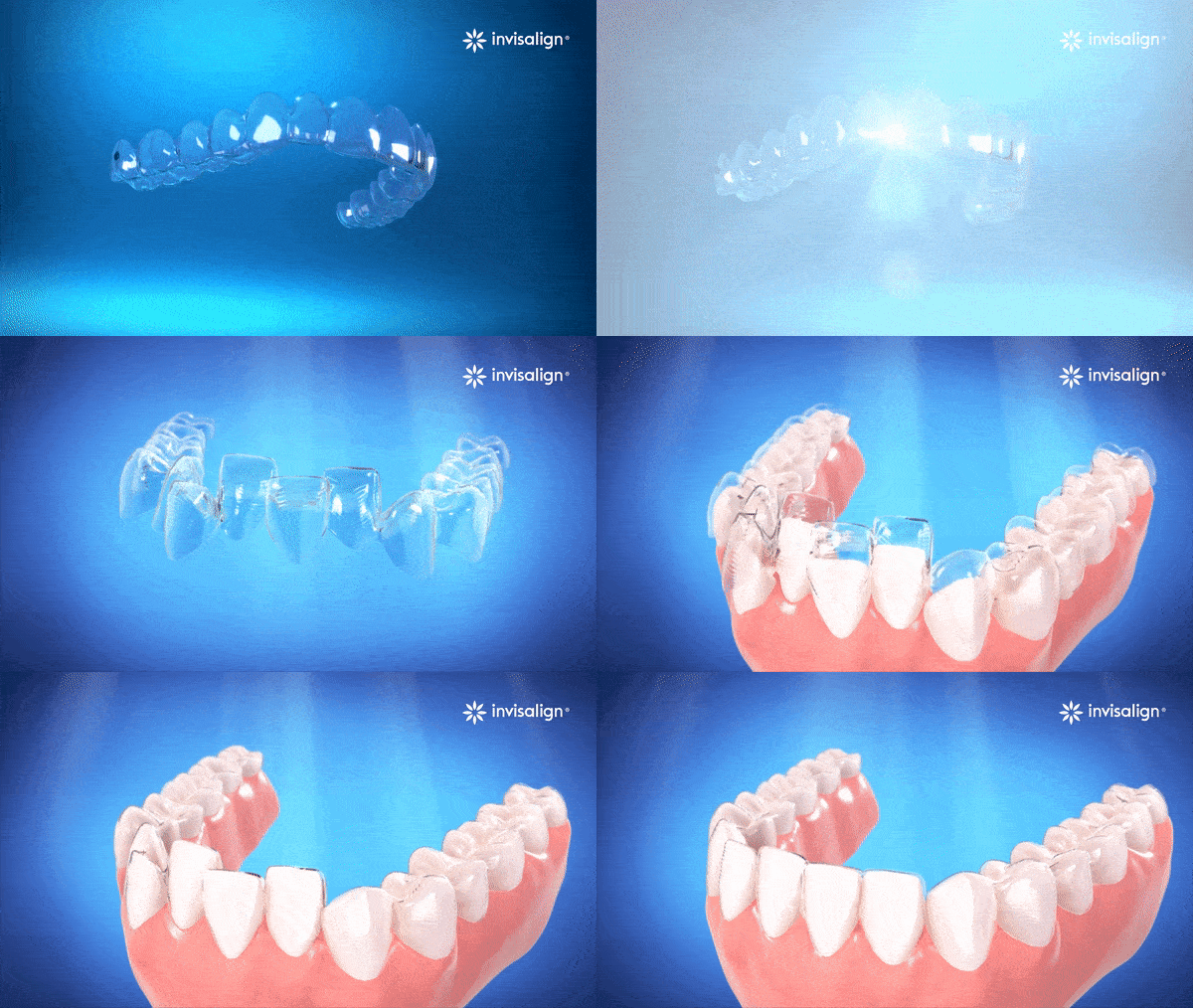
Each aligner is made to match the position of the teeth at the next stage. When the aligner is put in, there is a very small difference between where the tooth is and where the aligner is guiding it. To close this gap, the aligner applies a light, continuous force to the tooth. The bone surrounding the tooth slowly breaks down on the pressure side and rebuilds on the opposite side; this is how the tooth moves to its new position.
Because the stages are kept small, tooth movements are controlled. Within a few days the aligner brings the teeth to the intended intermediate position; for the rest of the time the tooth settles in its new position. As aligners are usually changed every 1–2 weeks, the total movement is the sum of many small steps. You can see an illustrative version of this gradual progress in the interactive drawing on the home page.
How is digital planning done?
A 3D model of the teeth is captured in a few minutes with an intraoral scanner. On this model the dentist plans how each tooth will move: in what order, in which direction and by how much. The planning software divides these movements into stages and shows the intended result as a simulation. This simulation can be shared with the patient, who can see the outline of the plan before treatment starts.
The simulation is a target, not a promise of an exact result. Bone and gum tissue respond differently from person to person; so interim adjustments with a new scan and additional aligners during treatment are normal.
What do attachments do?
Attachments are small, tooth-coloured composite bumps bonded to the surface of some teeth. They help the aligner grip the tooth more firmly and assist with movements the aligner would find difficult on its own:
- Turning a tooth around its own axis (rotation)
- Correcting the tilt of the tooth's root
- Pulling a tooth down (extrusion) or pushing it in (intrusion)
The number, shape and position of attachments are set in the digital plan. When treatment ends, they are removed by cleaning and polishing without damaging the tooth surface.
Aligner material
Invisalign aligners are made from a flexible, multi-layer thermoplastic material. The material is strong enough to fit snugly over the teeth and flexible enough to be put in and taken out. Aligners are sensitive to heat; they should not be cleaned with hot water or left somewhere hot. For detailed tips, see the wear and care guide.
Auxiliary procedures
In some treatments the aligners may be combined with the following:
- Interproximal reduction (IPR): Removing fractions of a millimetre of enamel from the contact surfaces of teeth to create space.
- Elastics: Small rubber bands attached to the aligners to correct the bite relationship between the upper and lower jaws.
- Precision wings: Projections added to aligners to guide the lower jaw forward in growing patients. See mandibular advancement.
- Eruption spaces: Aligner designs that leave room for erupting teeth in young patients.
Protocols by age group
The Invisalign system has protocols for different age groups:
- Invisalign First: For conditions needing early treatment in children in the mixed dentition (roughly ages 6–10).
- Invisalign Teen: For adolescence, when the permanent teeth are erupting; may include wear indicators and eruption spaces.
- Adult treatment: For patients who have finished growing, taking gum and bone condition into account.
Can Invisalign be used in every case?
No. Severe skeletal discrepancies, active gum disease, untreated decay or situations where the aligners cannot be worn consistently may call for a different approach. Whether clear aligners are suitable for you is decided after the examination, X-rays and digital scan.