Invisalign® clear aligner treatment · Oran, Çankaya / Ankara
Invisalign and Clear Aligner Orthodontics in Ankara
Your teeth are aligned in small steps with clear aligners made just for you. The aligners are hard to notice and are taken out when you eat and brush your teeth. Let's assess together at an examination whether they are right for you.

- iTero digital intraoral scanning
- Monday–Saturday 09:00–20:00
- Our team speaks English.
Orthodontics with clear aligners, as part of everyday life
In Invisalign treatment, teeth are moved in small steps by a series of clear aligners made for you. Here is what patients most often want to know about daily life during treatment.

Hard to notice
Thin, clear aligners sit over the teeth and usually go unnoticed when you talk or smile.

Taken out to eat
You remove the aligners when you eat and brush, so your eating and oral-care habits stay the same.

No brackets or wires
No brackets or wires are bonded to the teeth; the aligners are changed in sequence to move the teeth step by step.

See the plan in advance
Tooth movements are planned stage by stage on a computer, and the planned position is shared with you before treatment starts.
Clear aligner treatment in brief
Clear aligner treatment is an orthodontic method in which the teeth are moved in small, planned steps by a series of thin, clear aligners made for each patient. The aligners are removable: you take them out to eat and brush your teeth and wear them for the rest of the day. Each aligner is slightly different from the previous one and guides the teeth towards the position set out in the digital plan.
On this website we explain how the method works, which problems it is used for, its limits and every stage of treatment. Our aim is to give clear and balanced answers to your questions before you come for an examination.
What this guide covers
- Orthodontic treatment with clear aligners: an overview of the method, its advantages and its limits
- What is Invisalign? How aligners move teeth, attachments and digital planning
- The treatment process: step by step, from examination to retention
- Wear and care guide: how many hours a day, how to clean them, what you can eat and drink
- Clear aligners or braces? A comparison of the two methods
- Orthodontic conditions: crowding, gaps, deep bite, open bite, crossbite and protruding teeth
- Frequently asked questions: what patients most often want to know
How does Invisalign move teeth?
On a 3D digital model of your teeth, the direction and amount each tooth will move is planned stage by stage. A series of clear aligners is then made according to this plan.
- Each aligner holds the teeth in a slightly different position from the previous one and applies a light, controlled force.
- Aligners are usually changed for the next one every 1–2 weeks.
- If needed, small tooth-coloured bumps (attachments) are bonded to some teeth to help the aligner grip.
- To work, aligners need to be worn 20–22 hours a day.
The treatment journey, from examination to retention
Clear aligner treatment starts with an examination and digital records. See what happens at each stage and how long it takes.
 Step 1
Examination and assessment
Your concerns are heard, and your teeth, gums, bite and facial structure are examined. Whether clear aligners are suitable is first discussed at this stage.
About 30–60 minutes
 Step 2
Records and 3D scan
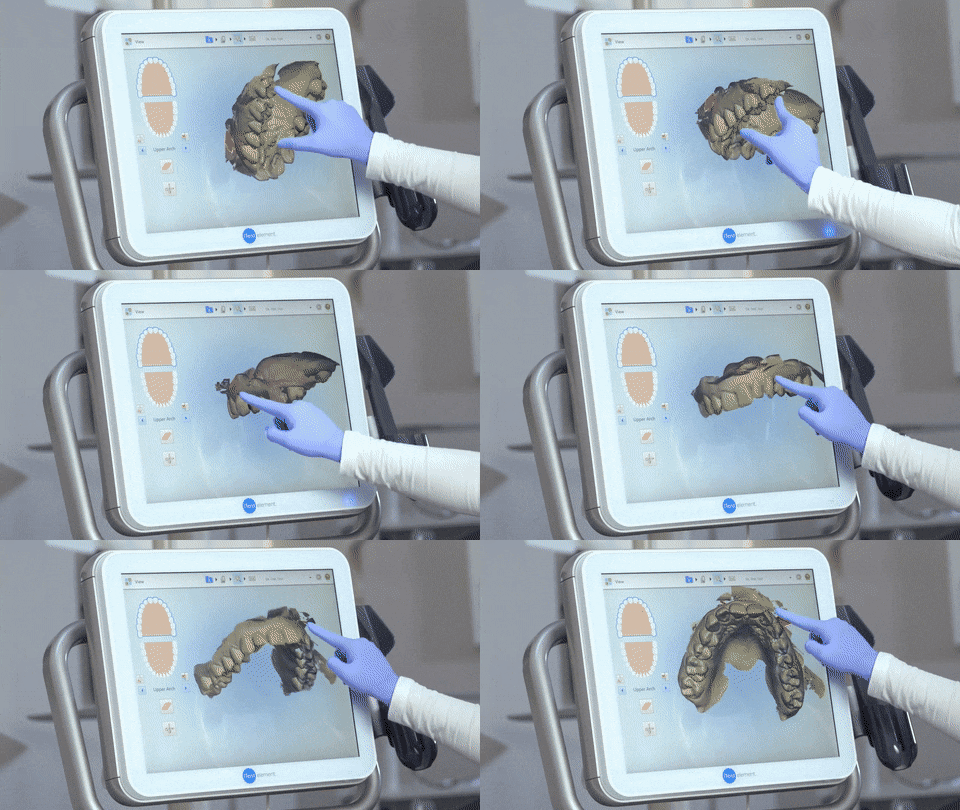
Any necessary X-rays and photos are taken, and the teeth are recorded in 3D with an intraoral scanner. No impression material is used.
A scan of a few minutes
 Step 3
Digital treatment plan
Tooth movements are planned stage by stage on the computer. A simulation showing the target position and the estimated duration is shared with you.
Production after plan approval
 Step 4
Aligner fitting
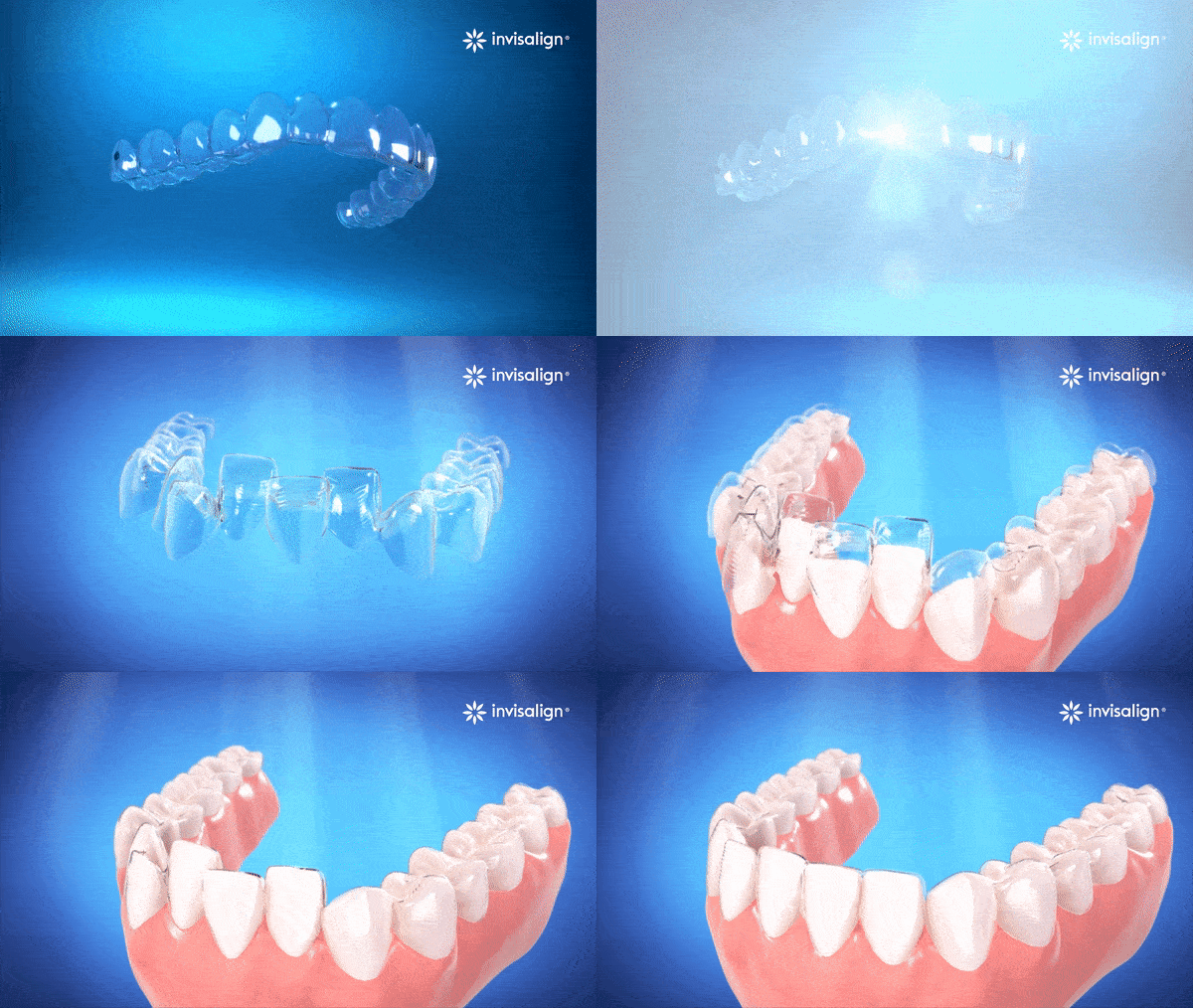
Attachments are bonded if needed and the first aligners are fitted; wearing, cleaning and changing aligners are demonstrated.
First appointment
 Step 5
Aligner changes and check-ups
Aligners are usually changed every 1–2 weeks. Progress is assessed at check-ups, and an additional set of aligners is planned if needed.
Check-ups every 6–10 weeks
 Step 6
Retention
Once the teeth reach the target position, a retainer or a fixed retention wire is used to keep them in their new position.
Long term, mostly at night
Try aligner-by-aligner alignment yourself
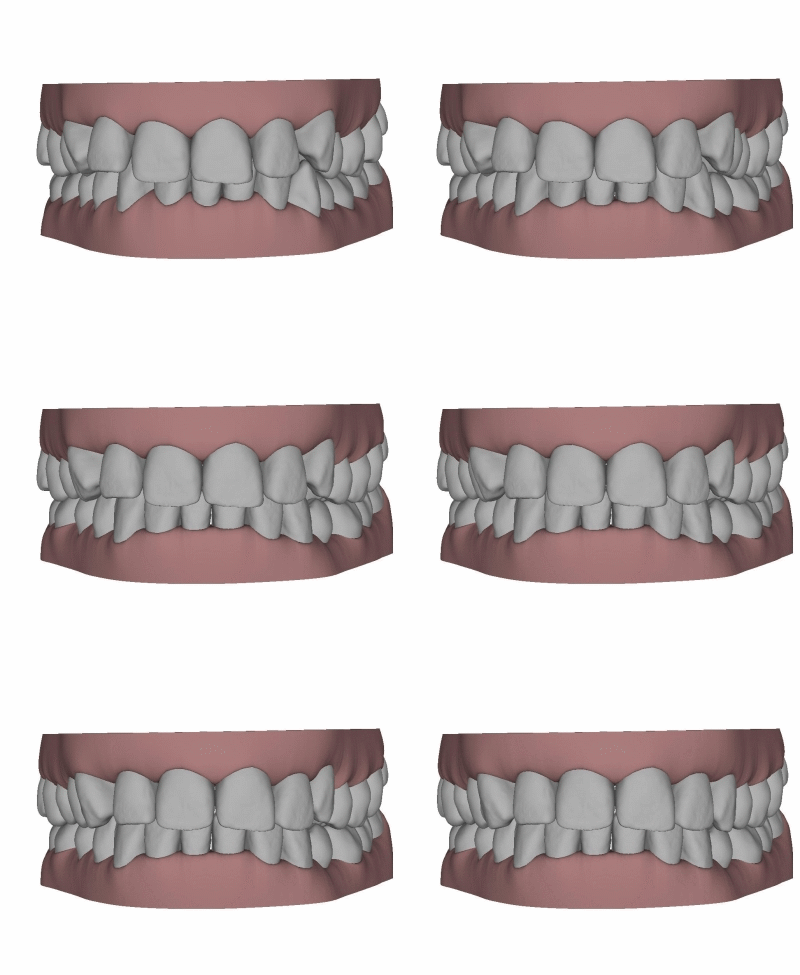
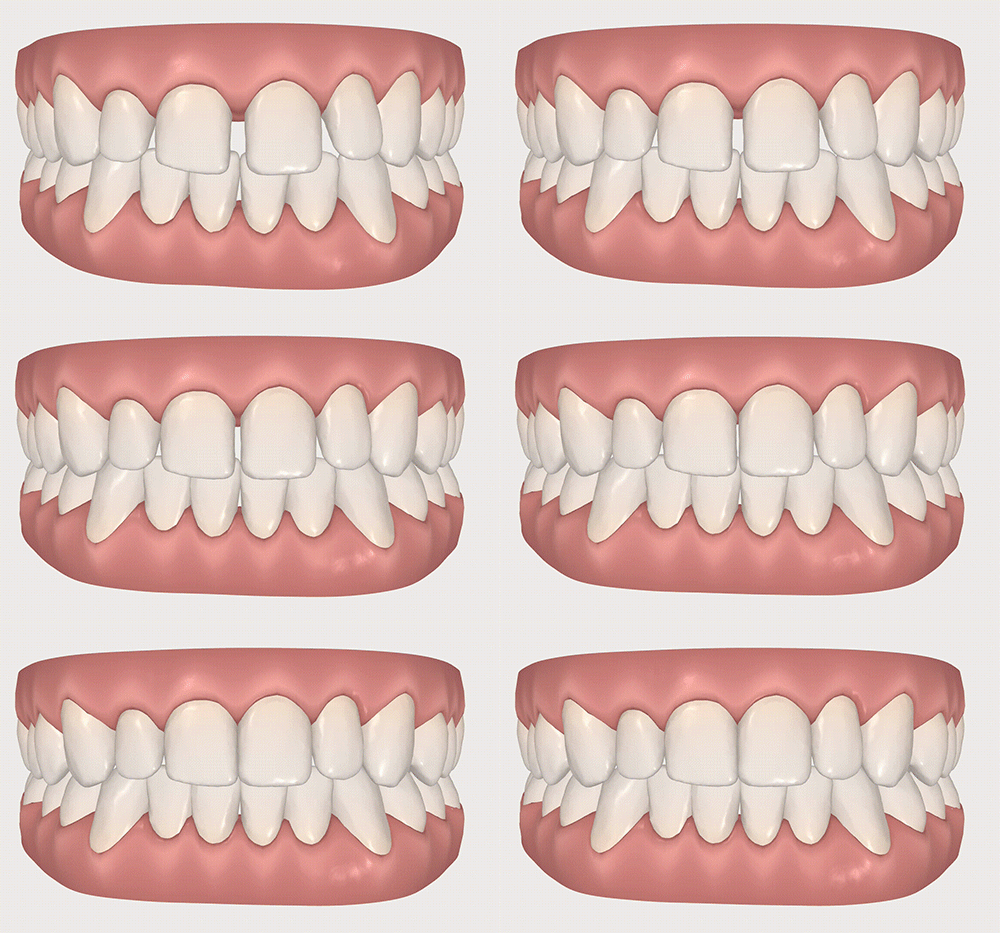
Move the slider: with each new aligner, crowded teeth come one small step closer into line. In real treatment, the number of aligners and the amount of movement are planned for each person.
Illustration only. The amount of movement and the number of aligners differ for each person and are set during the examination and digital planning.
Which problems can it treat?
Clear aligners can be used for many tooth alignment and bite problems; some skeletal problems need different or additional methods.


Living in Ankara or coming from abroad?
We welcome patients who live in Ankara as well as those travelling from other cities or countries. Our team speaks English, German and Russian.
Plan the first visit in advance
Before you travel, write to us on WhatsApp or by email with your preferred dates. The first visit includes the examination, any necessary imaging and the digital scan.
Several visits are needed
Aligner treatment is not completed in a single visit: attachments, check-ups and the retention phase are part of the process. How check-ups can fit your travel plans is discussed at the examination.
Easy to reach in Ankara
The clinic is in the Park Oran Ofis building in Oran, Çankaya. Ankara Esenboğa Airport connects the city with many domestic and international destinations.
Whether treatment is suitable, and how long it will take, can only be decided after an examination.
Request your examination online
Choose a day and time window that suits you in the form. The clinic will call you or message you on WhatsApp to confirm.
- 1Day and time windowMonday to Saturday – morning, midday or afternoon
- 2Contact detailsName, phone and topic of the examination
- 3ConfirmationThe clinic calls you or messages you on WhatsApp
Clear aligners from childhood to adulthood
The aims of treatment and what needs to be monitored differ with age.


Watch how clear aligner treatment works
Videos are for information only and were produced by third parties; most are in Turkish. Every patient's treatment is different. All videos
Everything about Invisalign on one page
How does it work, who is it for, how long does it take, how is it worn and what affects the cost? A summary guide for anyone considering Invisalign in Ankara.
Questions patients ask most often
What is clear aligner (Invisalign) treatment?
Clear aligner treatment is an orthodontic method that moves the teeth with a series of thin, clear, custom-made plastic aligners. Each aligner moves the teeth one small step as set out in the digital treatment plan; the aligners are changed in sequence at set intervals. Invisalign is one of the registered brand names for this method.
What is the difference between clear aligners and braces?
Brackets are bonded to the teeth and apply force with a wire; they stay fixed in the mouth throughout treatment. Clear aligners are removable; they come out for eating and brushing. Aligners are less noticeable and make oral hygiene easier, but to be effective they must be worn for most of the day. Which method suits you is decided at the examination, based on the type of problem and your expectations.
For a detailed comparison, see the Clear aligners or braces? page.
Who is clear aligner treatment suitable for?
It can be used for many alignment problems such as crowding, gaps between teeth, and deep, open and crossbites. There are different protocols for children in the mixed dentition, for teenagers and for adults. Marked skeletal jaw discrepancies may need additional methods or surgical planning. Suitability is assessed with an examination, X-rays and a digital scan.
How long does clear aligner treatment take?
The duration depends on the type and severity of the problem. Mild crowding may be corrected within a few months, while comprehensive cases usually take 12–24 months. Wearing the aligners for the recommended time is the most important factor in keeping to the expected duration. Your estimated duration is shared once the digital treatment plan has been prepared.
How many hours a day should clear aligners be worn?
Wearing them 20–22 hours a day is usually recommended. The aligners come out only for eating, for drinking anything other than water, and for brushing. Wearing them for less time can delay the teeth reaching their planned position and make it harder for the next aligner to fit.
Do clear aligners hurt?
When you switch to a new aligner, it is normal to feel pressure or tenderness in the teeth for the first 1–3 days; it shows the teeth are moving. This usually eases by itself. If a sharp edge irritates your tongue or cheek, or the pain lasts more than a few days, let the clinic know.
At what age should I take my child for a first orthodontic check-up?
Orthodontic societies recommend that most children are assessed by an orthodontist at around age 7. At this age the first permanent molars and incisors are coming through, so the bite and jaw development can be assessed. Not every child needs treatment; some are only monitored.
How much does clear aligner treatment cost?
The fee varies from person to person depending on factors such as the extent of the problem, treatment length, the number of aligners needed, additional procedures and retention after treatment. For this reason, fee information is given in writing after the examination and treatment planning. We explain the factors that determine the fee on this page.
Will my teeth go back after treatment ends?
Teeth tend to move back towards their old positions, especially in the first months after treatment. That is why a retainer is used after treatment. Removable retainers are usually recommended full-time for a while and then mostly at night; in some cases a thin fixed wire is bonded behind the teeth. Details: Retention.

Let's assess together whether it is right for you
Whether clear aligners suit you is determined by an oral examination, any necessary imaging and a digital scan. You can request an appointment online, call us or message us on WhatsApp – our team speaks English.
Funda Sarıkaya Oral and Dental Health Polyclinic · Park Oran Ofis, Shop No. 70, Kudüs Cd., Oran, Çankaya / Ankara (next to Panora Mall, opposite One Tower Mall)
Latest articles
All articles
Tooth Decay in Children: Why It Happens and How to Spot It
Why does tooth decay develop in children, what are the first signs and when should you see a dentist? The basics every parent should know.

Gum Recession Under a Dental Bridge: Causes and Treatment Options
Why do gums recede under or around a dental bridge, how can you tell, and which treatments are available? With care tips.

Coping With Fussiness During Teething in Babies
Why are teething babies unsettled, how can parents soothe them, what should be avoided and when should you see a doctor?