
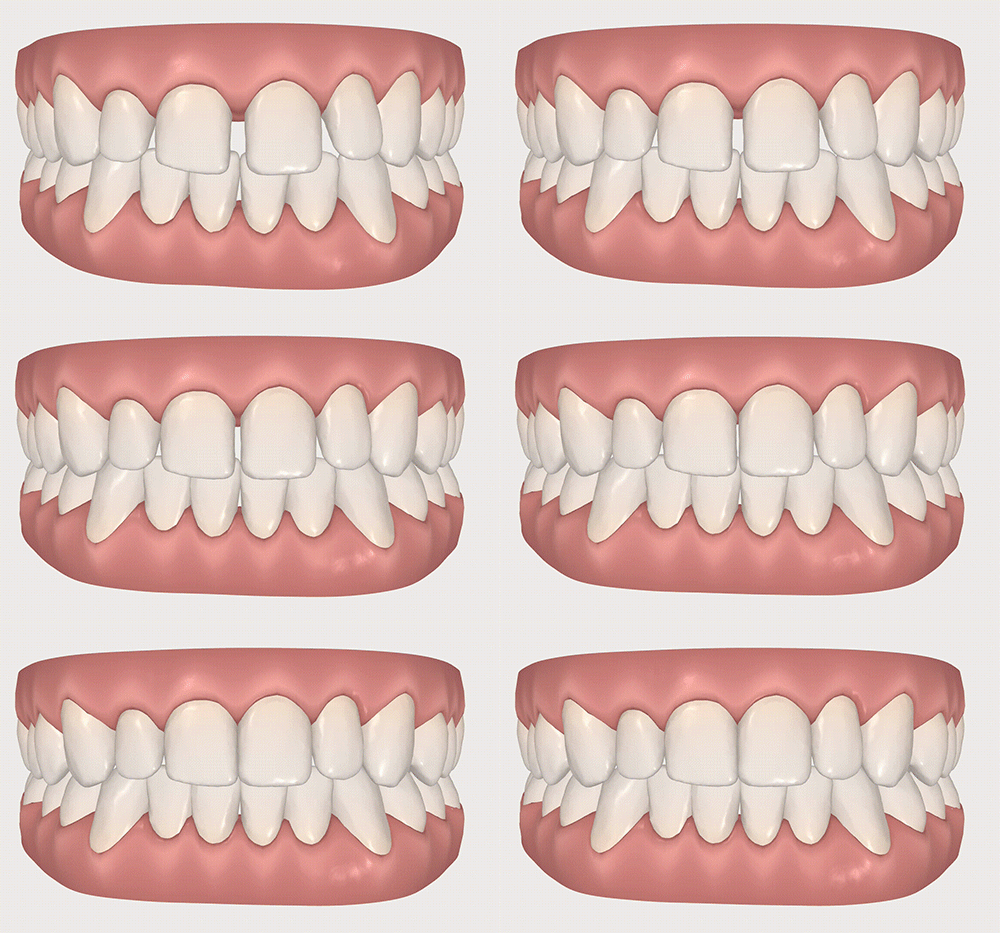
Why does a diastema form?
- Mismatch between tooth and jaw size: Teeth that are small relative to the jaw
- Small or missing teeth: Especially small (peg-shaped) or congenitally missing lateral incisors
- A thick lip tie (frenulum): The tissue connecting the upper lip to the gum extending between the two front teeth
- Habits: Tongue thrust, thumb sucking
- Gum disease: Teeth fanning out because of bone loss
- Normal development in children: Gaps seen while the permanent front teeth come in may reduce on their own as the canines erupt
Is a gap in children always a problem?
No. Between the ages of 6 and 12, a gap between the upper front teeth is a normal part of development in most children and tends to close as the permanent canines come in. Whether a gap should be monitored or treated is decided at the examination.
Treatment options
Clear aligners
Most gaps caused by the teeth can be closed with clear aligners. The teeth are brought together in a planned way and, if necessary, the position of other teeth is also adjusted.
Brackets
If the gap comes with more extensive bite problems, fixed treatment may be preferred.
Cosmetic bonding and veneers
If the teeth are smaller than normal or the gap is due to their shape, reshaping with composite bonding or veneers may be considered. In some cases, the spaces are first distributed appropriately with orthodontics, followed by aesthetic treatment.
Frenulum procedure
If a thick lip tie prevents the gap from closing or causes a closed gap to reopen, a minor surgical procedure (frenectomy) may be recommended. Its timing is planned around the orthodontic treatment.
After the gap is closed
Closed diastemas tend to reopen. That is why long-term retention with a thin fixed wire bonded to the back of the front teeth is usually recommended.