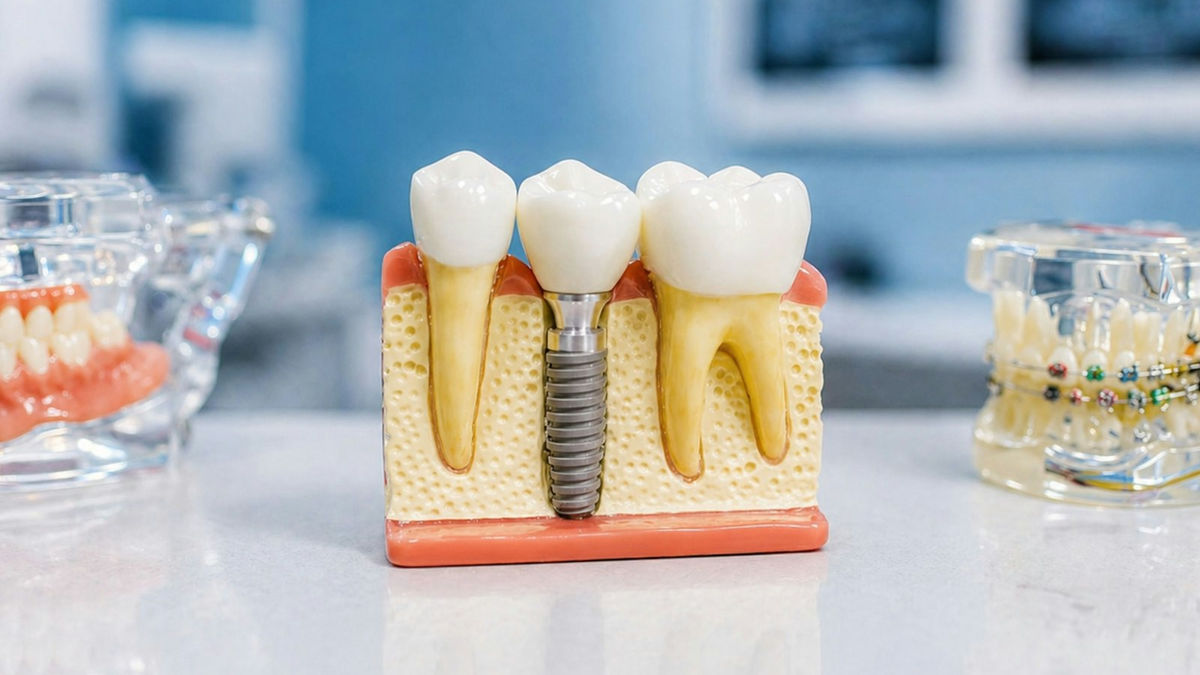


Short answer: An implant card or implant information document is a record showing the manufacturer, system, diameter, length and batch (lot) number of the implant placed in your mouth. Although issuing a card for dental implants is not mandatory in every country, asking for this information and keeping it makes things considerably easier years later, for example when parts need replacing, when you see a different dentist or when you move.
Why does implant information matter?
Once the implant body has fused with the bone, it can stay in place for a long time. However, the parts on top of it can wear with use, the screw can loosen or the crown may need renewing. In that case the dentist needs to know which system the implant belongs to and which connection type it uses.
- Part replacement: System information is needed to choose the right compatible part when a screw, abutment or crown is replaced.
- Seeing a different dentist: When you are assessed at another clinic because of a move, a holiday or an emergency, the process goes faster.
- Treatment abroad: If you have had, or will have, part of your treatment done in another country, the documents provide continuity.
- Product tracking: If a safety notice is issued for a product, the batch number lets you find out whether you are affected.
- Medical imaging: For some examinations it can be useful to know about the metal parts in your mouth.
Which details should you ask for?
It is useful to get the following details from your clinic in writing:
- The implant manufacturer and system name
- The diameter and length of the implant
- The product code and batch (lot) number
- The tooth position where it was placed and the date
- The type of abutment and screw used
- The type of crown or bridge: whether it is screw-retained or cemented
- Details of any bone grafting or additional procedure, if performed
- The contact details of the clinic that carried out the treatment
This information is usually entered in the patient file together with the labels that come from the implant packaging. In Türkiye, medical devices are registered in the Product Tracking System (ÜTS) of the Turkish Medicines and Medical Devices Agency (TİTCK), so product and batch details are on record.
How should you keep the information?
- Keep the document from the clinic, or a photo of the labels, on your phone and in your email.
- Ask for a digital copy of your implant X-rays.
- If you have more than one implant, keep a note for each one on a separate line.
- Keep your treatment documents together with your health records. You can find the documents available from the clinic on our patient file and forms page.
My implant has no card: how can I find out the details?
A reliable way is to contact the clinic where the treatment was done and ask for your records. If the clinic records cannot be accessed, an X-ray and an oral examination can give an idea of the implant system; however, they do not always give a definite answer. That is why getting the information during treatment is the practical approach.
Check-ups and care
However complete your implant information is, keeping the implant healthy over the long term depends on regular care and check-ups. For cleaning at home, see our implant cleaning guide, and for the first days, our article on the healing process after an implant. If you notice your crown moving, a feeling that the screw is loose or bleeding from the gums, see your dentist without waiting.
Frequently asked questions
Is it mandatory to issue a card for dental implants?
Implant card practice can vary by country and regulation; a separate card may not always be issued for dental implants. Whether or not a card is issued, asking for your implant information in writing is in the patient’s interest.
Why is the batch number important?
The batch (lot) number shows which production batch a product belongs to. If the manufacturer or an official authority issues a notice, you can use this number to find out whether you are affected.
Do implants cause problems at airport security?
Dental implants usually do not cause problems at airport security checks. Still, if you have any concerns, carrying your documents with you can be reassuring.
How can you find out what suits you?
The information here is general; the right option for you is determined through an examination and the dentist’s assessment. For appointments and directions, see our contact page.