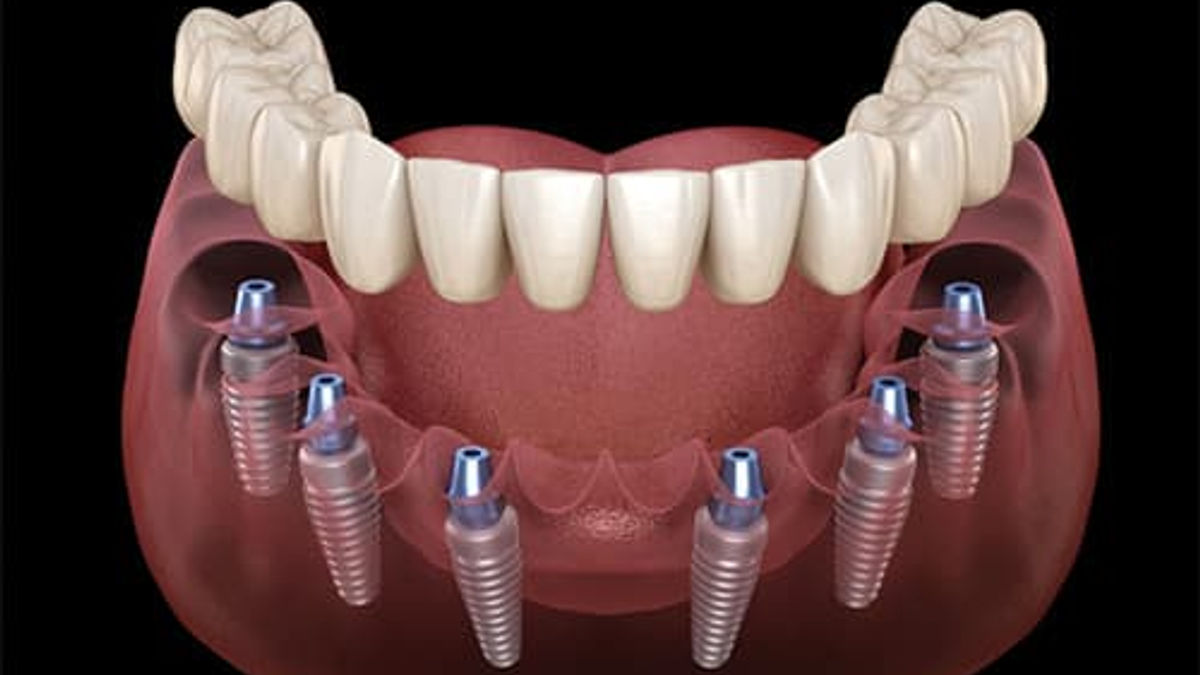
Losing all of one's teeth affects chewing, speech, nutrition and facial appearance. Today there are different treatment options for people with no teeth. Which option is suitable depends on bone structure, general health, expectations and oral care habits.
Complete (removable) dentures
Conventional removable dentures that rest on the gums.
- No surgery is needed.
- Retention problems can occur, especially in the lower jaw.
- Over time, because of bone resorption, the denture may need to be remade or relined.
Removable implant-retained dentures
Dentures that clip onto a small number of implants (usually 2 in the lower jaw, 4 or more in the upper jaw) with attachments.
- Retention and chewing efficiency are improved compared with a conventional denture.
- They can be taken out by the patient for cleaning.
Fixed implant-supported prostheses (All-on-4, All-on-6)
Prostheses fixed onto 4 or 6 implants in each jaw that the patient does not remove.
- Because they are fixed, they can feel closer to natural teeth in use.
- In suitable cases, angled implants can reduce the need for bone grafting.
- If the bone and general health allow, in some cases a temporary fixed prosthesis can be fitted shortly after the implants are placed.
The treatment process
- Examination, medical history and bone assessment with cone-beam CT
- Prosthesis-driven digital planning
- Placement of the implants
- Healing period and temporary prosthesis
- Making the final prosthesis
- Regular check-ups and professional maintenance
Who may it not suit?
- Conditions that affect healing, such as uncontrolled diabetes
- Use of certain bone medications
- Heavy smoking
- Being unable to keep up oral care
These conditions do not necessarily rule out treatment, but they require more careful planning.
Care
The underside of implant-supported prostheses and the areas around the implants must be cleaned regularly. For details, see our implant cleaning guide.


