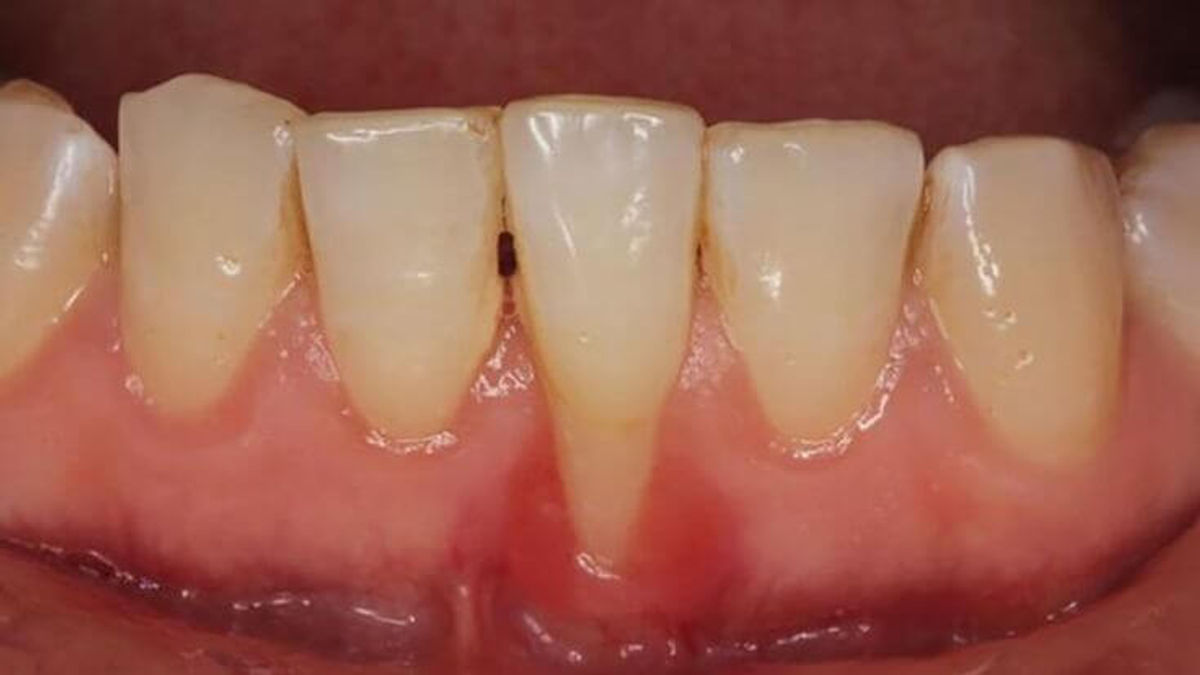
Gum recession is when the gum pulls back towards the root of the tooth, exposing the root surface. Because it usually progresses slowly, it may be noticed late. Exposed root surfaces can cause sensitivity, decay and cosmetic concerns.
Causes
- Hard and incorrect brushing: A hard-bristled brush and horizontal, heavy-pressure brushing
- Gum disease: Plaque-related inflammation can affect the gum and the bone beneath
- Clenching and grinding: Excessive force on the teeth
- Tooth position: The gum is thinner over teeth positioned outside the bone or crowded
- Smoking
- Thin gum tissue and inherited tendency
- Poorly fitting filling, crown or denture edges
- Lip or tongue piercings
Signs
- Teeth looking longer
- Sensitivity to hot and cold at the neck of the tooth
- A colour difference on the root surface
- Triangular gaps between the teeth
What you can do to prevent it
Correct brushing
Use a soft-bristled brush, hold it at about 45 degrees to the gum and brush with small circular movements without pressing.
Floss and interdental brushes
Clean the plaque between your teeth every day.
Tartar removal and check-ups
A check-up every six months and tartar removal when needed allow gum disease to be detected early.
Quitting smoking
Smoking is one of the most important risk factors for gum disease.
Protection against clenching
If you clench at night, a protective guard may be recommended.
The link with orthodontics
The gum recedes more easily over crowded teeth or teeth positioned outside the bone. In suitable cases, bringing the teeth into a more balanced position within the bone can help protect the gum. On the other hand, if there is gum disease, it must be brought under control before orthodontic treatment. For information on orthodontics for adults, see our wire-free orthodontics for adults page.
Treatment options
- Treatment of gum disease (scaling, deep cleaning)
- Fluoride applications and sensitivity toothpastes
- Repairing tissue loss on the root surface with fillings
- Surgical procedures such as gum grafts in suitable cases


